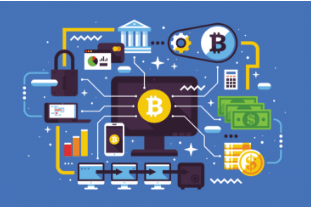
Blockchain and Big Data Integration offers a structured lens on combining immutable ledgers with high-volume data streams. The approach emphasizes provenance, privacy, and policy-driven governance across systems. It analyzes how traceability and auditable workflows can coexist with data ownership and interoperability. The discussion points to cross-industry patterns and practical constraints, inviting careful consideration of architectures, standards, and risk controls that shape scalable solutions. The implications merit further examination as organizations seek coherent, trusted data ecosystems.
What Blockchain–Big Data Integration Solves
Blockchain–Big Data integration addresses the core challenges of data trust, provenance, and governance by combining the immutability and decentralization of ledger technology with the volume, variety, and velocity of big data.
It enables transparent data governance and clear data lineage, supporting auditable workflows, consistent policy enforcement, and cross-system integrity while preserving autonomy and accelerating insight without sacrificing accountability or control.
Architecting Trusted Data Provenance and Privacy
The approach analyzes artifact trust, immutable records, and modular privacy measures to preserve transparency without exposure.
It defines data lineage benchmarks and privacy guarantees, enabling calculable risk, compliant auditing, and resilient information governance.
Real-World Use Cases Across Industries
Real-world deployments of Blockchain–Big Data integration span finance, supply chains, healthcare, and public sector services, illustrating how immutable ledgers and scalable analytics converge to enhance transparency, efficiency, and risk management.
Across industries, data governance structures ensure accountable stewardship, while data lineage clarifies provenance and change history.
Systematic integration fosters interoperability, verifiability, and trust, enabling innovators to balance autonomy with governance in dynamic ecosystems.
Building a Practical Roadmap for Implementation
How can organizations translate the potential of Blockchain–Big Data integration into a concrete, actionable plan? A practical roadmap emerges from structured governance and interoperable systems.
Establish data governance processes, identify interoperable data formats, and align stakeholders.
Define milestones, risk controls, and measurable outcomes.
Ensure data interoperability across platforms, implement modular blocks, and maintain continuous evaluation for scalable, freedom-driven adoption.
See also: The Future of Music Technology
Frequently Asked Questions
How Scalable Is Blockchain for Real-Time Big Data Analytics?
The scalability of blockchain for real-time big data analytics is constrained by latency tradeoffs and incomplete scalability benchmarks, though selective architectures show moderate improvements. Systematic evaluation reveals integrative approaches balancing throughput, latency, and verifiable insights for freedom-seeking analysts.
What Governance Models Ensure Fair Data Access in BDA Systems?
Governance models ensure fair data access by codifying data sovereignty, enforcing access control, and auditing data provenance, while ecosystem governance aligns stakeholders, mitigates conflicts, and sustains trust through transparent policies and measurable accountability.
Can AI Integrate With Blockchain-Based Data Provenance Securely?
“Like a compass in fog, the answer points true.” AI can integrate with blockchain-based data provenance securely, provided robust AI governance and privacy preservation measures, rigorous auditing, and interoperable cryptographic proofs to ensure integrity, transparency, and auditable decentralized access.
How Is Data Quality Maintained Across Distributed Ledgers?
Data quality is sustained via robust governance models, standardized provenance, and auditing across distributed ledgers; fair data access and AI integration balance costs and ROI, while blockchain projects reinforce data provenance and overall trust in data ecosystems.
What Are the Costs and ROI of BDA Blockchain Projects?
Cost ROI and project budgeting dominate BDA blockchain project evaluations; analysts quantify upfront and ongoing expenses, expected payback, and intangible benefits. The approach is analytical, systematic, integrative, emphasizing disciplined budgeting, risk assessment, and freedom-focused strategic insight.
Conclusion
Blockchain and big data integration creates verifiable data provenance, strengthened governance, and privacy-preserving analytics across ecosystems. An illustrative stat: organizations report up to a 40% reduction in audit time after implementing blockchain-enabled provenance and automated policy enforcement. The conclusion synthesizes an analytical, systematic view: integrating immutable ledgers with scalable data platforms fosters interoperable, trust-driven insights, enabling compliant cross-system workflows while preserving data ownership. This integrative approach supports scalable analytics, risk-aware auditing, and transparent governance in complex environments.